
Construction Debris and Yard Waste Removal
Construction debris removal in Huntsville is for the pile that is too big for the trash and too small for a dumpster: drywall, lumber offcuts, flooring, tile, cabinets, packaging and the old fence or deck that came down with the remodel. We load it, haul it and take it to the proper facility, priced by the load from a photo. Yard waste and storm debris, limbs, brush, fence sections and shed roofs, go the same way.
Madison County has been building faster than almost anywhere in the state, and every new street in Harvest, Meridianville, Madison or Hampton Cove has a driveway with a stack of what the builder left behind. Every remodel in a Five Points ranch produces a pile the city truck will not take. Every spring and November storm leaves limbs across half the county. This is the page for all three.
The crew brings its own rakes, saws, tarps and gloves, and the yard or the garage is swept when the truck leaves.
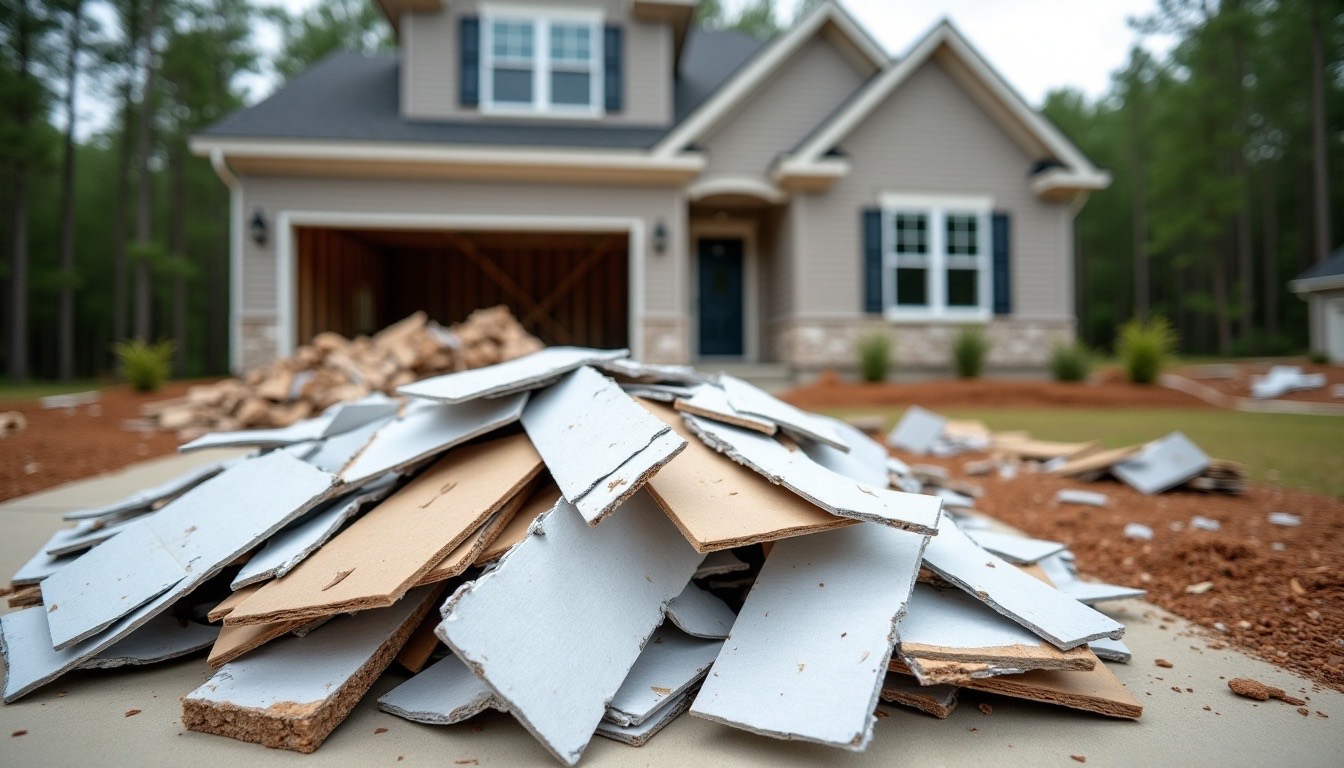
Remodel and builder leftovers
A bathroom remodel produces about a quarter load: the old vanity, the toilet, the tile, a few sheets of drywall and the packaging from the new fixtures. A kitchen is a half load or more once the cabinets and countertop come out. Flooring jobs make a flat, heavy pile of old carpet, pad and laminate that nobody wants to carry twice.
New-build leftovers are their own thing. Closing day in a new subdivision comes with half a pallet of extra tile, the spare flooring boxes, scrap trim, a broken door, the cardboard from every appliance and the pallets it all rode in on, usually stacked along one wall of the garage. Builders do not come back for it. We take it as a load.
Contractors use us for the small jobs where rolling a dumpster costs more than the debris is worth, and for the end-of-job sweep when the dumpster already left. Send the photo from the site and we work around your schedule.
We take concrete, brick and block in small amounts; say how much in the form, because a pile of broken sidewalk prices by weight rather than space.
The remodels that produce the most are the ones in the 1950s and 60s ranches, where a kitchen update means plaster, old cabinets, a cast-iron sink and layers of flooring going back to the original. Those loads are heavy for their size, and the quote says so.
Storm limbs, fences and shed roofs
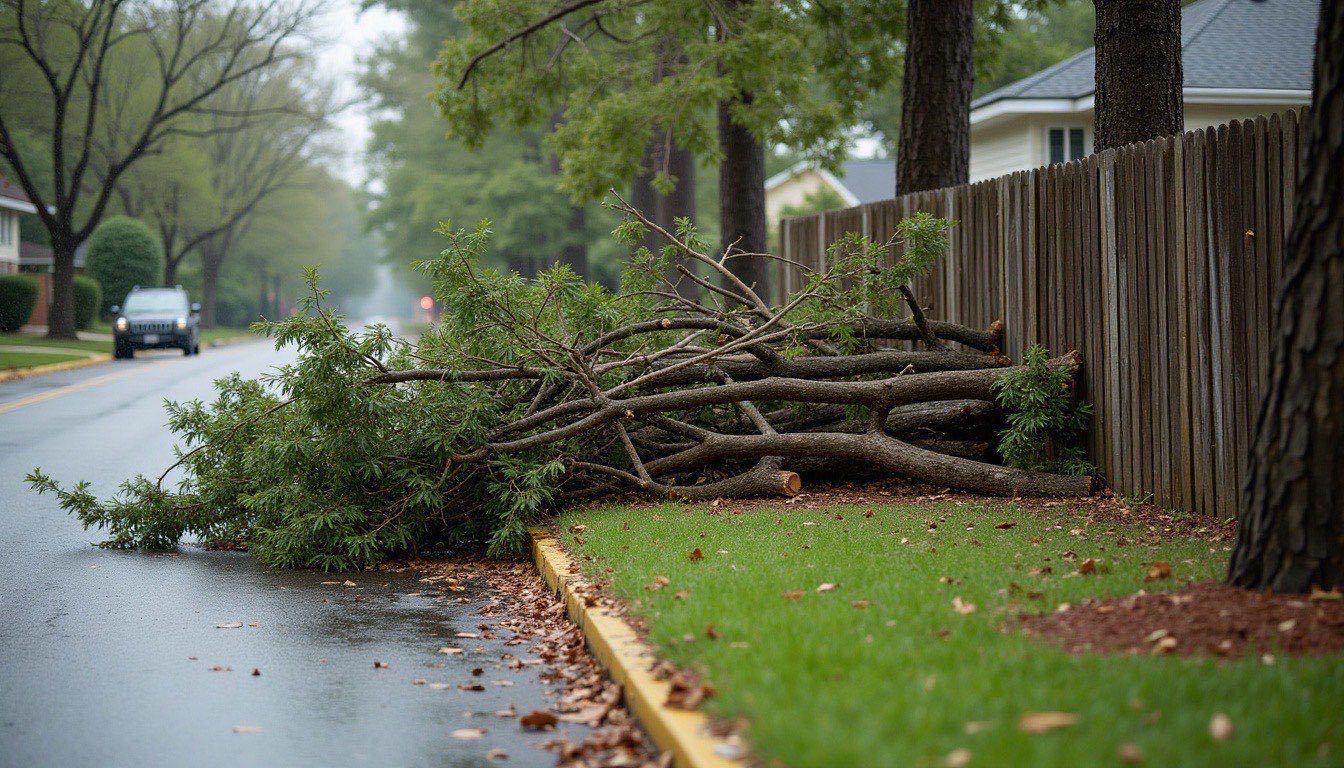
North Alabama sits on the edge of Dixie Alley, and the storm seasons are March through May and again in November. Afterward the county is full of downed oak limbs, pine tops, fence sections flat on the ground, shed roofs in the neighbor's yard and the contents of a carport scattered across a lot.
Yard waste removal after a storm is a load like any other. We cut limbs to a size we can carry, stack the fence panels and the sheet metal, bag the small stuff and clear the yard in one visit. Brush and limbs go to the proper facility for yard waste, and metal roofing goes to recycling.
Water-damaged contents, a flooded basement's worth of boxes, a soaked couch, a garage of drywall that got wet, go in the same load. If you are dealing with an insurance adjuster, we leave the pile until you have photos and then take it the same day.
Outside of storm season, the same crew handles the ordinary yard pile: the old fence after a new one goes in, a dead tree a cutter left in rounds, a season's worth of brush, the shrubs the builder planted that never took.
A full-size oak limb across a backyard in Jones Valley is a half load on its own once it is cut. Two of them and a fence section is a full load. We tell you which from the photo so there is no guessing at how many trips it takes.
Shed and deck teardown
A metal shed that has rusted through or a wooden deck that has gone soft is a demolition job before it is a hauling job, and we do both. Decks come apart board by board, the joists and posts get cut, and the whole thing leaves in one load, nails and all. Sheds get stripped of contents first, then taken down panel by panel.
We do not do demolition on anything attached to the house structure, anything with electrical or gas running to it until a licensed trade has disconnected it, or anything that might contain asbestos. A freestanding deck, a shed, a playset, a pergola or a fence is ours.
Say in the form whether the structure is wood or metal, roughly how big it is and whether it is still full of stuff. Most sheds and small decks come down and leave the same day.
A wooden privacy fence comes down the same way: panels off the posts, posts pulled or cut at the ground, concrete footings left or taken depending on what you want. Most fence runs around a subdivision backyard leave in one load.
What we cannot take
Asbestos siding, tile or insulation. Roofing tar in bulk. Paint, solvents, fuel and anything flammable. Propane tanks that are not empty. Anything that is leaking. Those have their own disposal routes and we will tell you where they go.
Shingles we take in small quantities from a repair, not a whole tear-off; a full roof replacement needs a dumpster and the roofer usually brings one. Dirt and sod in volume is a dump-truck job, not ours. Everything else that comes out of a remodel, a yard or a storm is fair game.
If a pile is mixed, the odd items come out in the driveway and we tell you what they are and where they go; the rest loads as normal.
Load sizes and pricing
Debris is priced by the load like everything else: quarter, half or full load, with concrete, brick and block priced by weight when there is enough of it to matter. The price covers the crew, loading, hauling and the facility fees.
A photo of the pile is the quote. Take it from far enough back to show the whole stack, and say whether it is loose or already bagged and stacked; a stacked pile loads faster and that shows up in the number.
Small contractor loads go on a regular route. If you want the same crew every Friday for the week's debris, say so and we set it up.
Storm debris in the week after a big system is first come, first served; send the photo as soon as the yard is safe to walk.
Drywall, tile and shingles are heavier than they look, so a short stack of them can price as a bigger load than a tall pile of cardboard. The photo and a word about what is in it sort that out.
Send a photo of the pile
A picture of the debris or the structure, the address and whether anything needs cutting or taking apart. You get a load price and a window.